Chain of Responsibility (CoR): Your Liability When Construction Vehicles Enter the Road
December 24, 2025
For decades, there was a prevailing myth in the construction industry regarding heavy vehicles: "Once the truck drives out the gate, it is the driver’s problem." If a concrete agitator was overloaded, if a tipper truck was speeding to make a deadline, or if a delivery driver was fatigued, the blame—and the fines—rested squarely on the person behind the wheel. For more details, read our guide on material delivery and site logistics. For more details, read our guide on managing traffic risk on site.
That era is over. Under the Heavy Vehicle National Law (HVNL), the legislation has shifted to a Chain of Responsibility (CoR) model. This legal framework recognises that drivers do not operate in a vacuum; they operate under the instructions, schedules, and constraints set by others.
For developers, site managers, and construction companies in New South Wales, this means the legal perimeter of your site effectively extends onto the public road. If your project influences the movement, loading, or scheduling of a heavy vehicle, you are a party to the chain. You share the liability for safety breaches.
At SSTC, we see traffic management as more than just directing flow; it is a critical component of your CoR compliance strategy. A professional traffic control team acts as the gatekeeper of your site, ensuring that the interface between your heavy industry and the public road is managed with absolute precision and compliance with the law.
Understanding the Chain of Responsibility in Construction
The core principle of CoR is simple: anyone who has control or influence over a transport task is responsible for ensuring it complies with the law. This responsibility is "non-transferable." You cannot contract it out. Even if you hire a third-party haulage company to remove spoil, you, as the site operator, retain a duty of care to ensure the task is carried out safely.
In the context of a construction site, the "Chain" typically includes:
The Consignor/Consignee: The developer or builder ordering materials.
The Scheduler: The Site Foreman who sets the delivery times.
The Loader/Packer: The excavator operator loading soil into a truck.
The Loading Manager: The person supervising the gate and the loading zone.
If a truck leaves your site in an unsafe condition—whether it is overloaded, insecurely loaded, or tracking mud onto the highway—and causes an accident, the investigation will look up the chain. They will ask: Did the site provide a safe method of egress? Did the site manager pressure the driver to rush? Was there a system in place to manage vehicle flow?
The Heavy Vehicle Interface: Where Liability Peaks
The highest risk point for any construction project is the "Heavy Vehicle Interface"—the physical point where a construction vehicle crosses the boundary from the private worksite onto the public road network. This is where traffic control becomes your primary defence against liability.
Safety Risk: A truck pulling out into 80km/h traffic creates an immediate collision hazard.
Compliance Risk: A truck entering the road without proper guidance breaches traffic management protocols.
Without professional Construction Traffic Control, the decision to enter the road is often left to the driver, who may have limited visibility due to hoarding, blind spots, or site geometry. If that driver pulls out and hits a cyclist, the site manager can be prosecuted for failing to provide a safe system of work.
The Role of Traffic Controllers as Gatekeepers
To mitigate CoR liability, the construction site must have a "Safe System of Work." In practice, this means having competent, accredited personnel managing the gate.
A traffic controller is not a passive observer. They are an active participant in the safety chain. When managing a site gate, our duties extend directly to risk mitigation:
Managing Safe Ingress and Egress
Traffic controllers act as the eyes and ears for the heavy vehicle driver. By stopping public traffic and pedestrians, we create a controlled exclusion zone that allows the heavy vehicle to enter or exit safely. This removes the guesswork for the driver and eliminates the "rush" factor, ensuring they only move when it is absolutely safe to do so.
Preventing Queuing and Fatigue
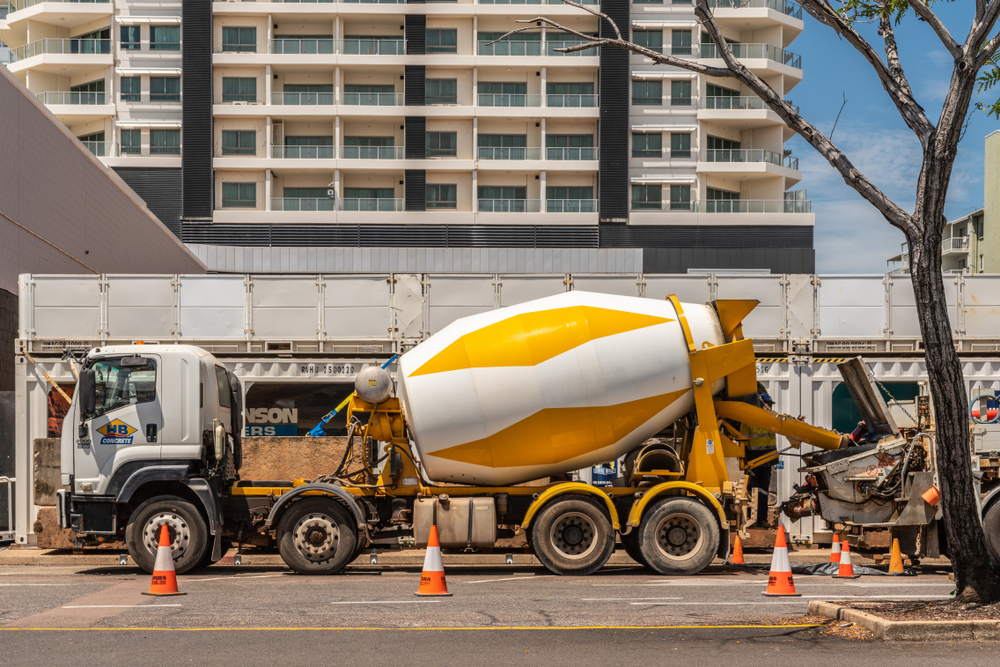
A common CoR breach occurs when sites overschedule deliveries. If ten concrete trucks arrive at 7:00 AM for a site that can only unload one at a time, the resulting queue on the public road creates a traffic hazard and places undue pressure on drivers (a fatigue risk).
A professional traffic management plan includes "Call-Up" protocols. Traffic controllers communicate with the drivers via radio, holding them in designated waiting bays away from the site and calling them in only when the loading zone is clear. This manages the flow, prevents illegal queuing on main roads, and demonstrates to the regulator that the site is actively managing driver fatigue and schedule adherence.
Load Restraint and Vehicle Condition
While a traffic controller is not a mechanic, they are often the final set of eyes on a vehicle before it re-enters the community. Part of the gatekeeper's role involves visual checks. Is the tailgate secured? Is there loose debris on the drawbar that could fly off? Are the tyres caked in mud that will create a slip hazard on the road?
If a vehicle is deemed unsafe, staff are trained to stop it and alert the Site Manager. This intervention is a critical proof point that your site takes CoR seriously.
Documentation: The Shield Against Prosecution
In the eyes of the law, if it isn't written down, it didn't happen. If an incident occurs, the first thing investigators will seize is the site diary and the traffic management logs.
One of the key advantages of partnering with a disciplined, veteran-led provider is the rigour of our documentation. We maintain detailed records of on-road activities. This includes:
Daily implementation of the Traffic Guidance Scheme (TGS).
Risk assessments are signed off at the start of every shift.
Incident reports regarding near-misses or non-compliant drivers.
This paper trail acts as your shield. It proves that you, as the "Primary Duty Holder," took all reasonable steps to ensure safety. It demonstrates that you engaged professional services, that a plan was in place, and that the plan was being followed.
Mitigating Risk Through Professional Partnership With SSTC
The expansion of Chain of Responsibility laws has fundamentally changed the risk profile of running a construction site in New South Wales. The heavy vehicle interface is no longer just an operational hurdle; it is a legal minefield. Ignorance of the law is no defence, and outsourcing the driving does not outsource the liability.
However, liability can be managed. By implementing robust systems, ensuring rigorous planning, and engaging a traffic management partner who understands the gravity of the legislation, you can protect your company and the community. At Site Security and Traffic Control, we act as the operational arm of your compliance strategy. We ensure that every vehicle entering or leaving your site does so under a safe, controlled, and documented system of work. If you are ready to strengthen your Chain of Responsibility defence and ensure your site is operating at the highest standard of safety, get a free quote and discuss your needs with our Construction Traffic Control experts or explore our wider Traffic Control Services.