Confined space rescue teams: compliance, planning, and site safety in Sydney & NSW
November 20, 2026
A confined space rescue team provides dedicated emergency response, atmospheric monitoring, and specialised extraction capabilities for personnel working in enclosed or partially enclosed areas. Under the Work Health and Safety Regulation 2025 (NSW), relevant confined space guidance, and AS 2865-2009, planned rescue arrangements can reduce the risk of secondary casualties by supporting a rapid, well-equipped response during atmospheric or physical emergencies.
To manage high-risk work environments across civil infrastructure and industrial facilities, you need structured planning, suitable equipment, and qualified safety personnel. At Site Security & Traffic Control (SSTC), an ISO-certified business, we combine traffic control, static security, industrial safety and site services to support commercial projects across NSW. Our team brings more than 50 years of combined civil and industrial experience, supported by our military-informed operational discipline.
Essential SafeWork NSW duty holder obligations and site hazard management
Confined space safety in NSW rests on a set of duty holder obligations that apply before and during every entry:
SafeWork NSW requirements include documented risk assessments and written confined space entry permits before a worker enters the space.
Atmospheric testing and monitoring must be undertaken according to the identified hazards and conditions of the confined space.
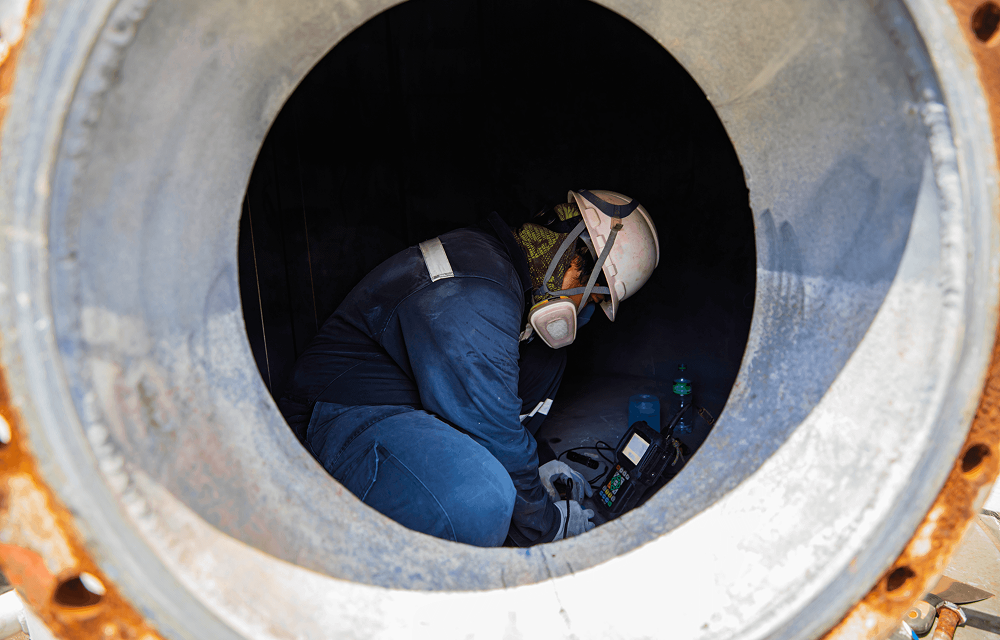
A stand-by person must remain outside the confined space, continuously monitor conditions, maintain communication with workers inside, and initiate emergency procedures when necessary. The stand-by person must never enter the space to attempt a rescue. Appropriate first aid and rescue procedures and equipment must also be in place and practised so they work in an emergency.
Improvised rescue attempts without appropriate hazard assessment and rescue equipment can expose additional workers to the same atmospheric or physical hazards faced by the original entrant.
How a confined space rescue team manages site risk and gas monitoring
High-risk enclosures present severe operational hazards that demand continuous oversight and technical controls. SafeWork NSW identifies critical risks including oxygen deficiency, airborne toxic contaminants, flammable gases, and physical engulfment.
When you engage our confined space rescue team, we support site-specific isolation protocols, ventilation checks, and gas detection before and during confined space work. Trained stand-by personnel maintain constant communication with entrant workers and initiate emergency procedures when required.
Atmospheric testing, gas detection, and environmental controls
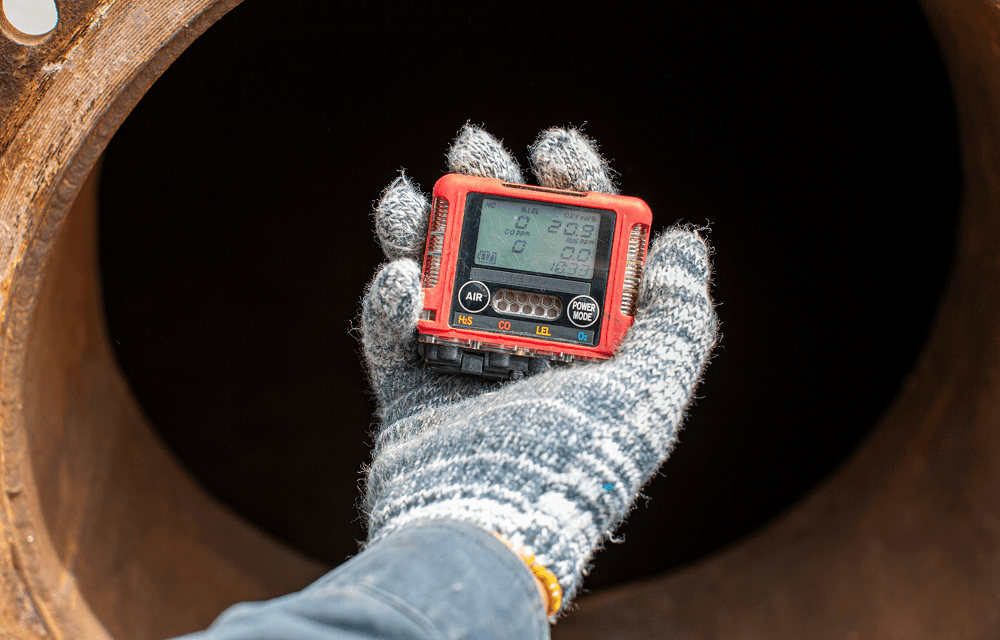
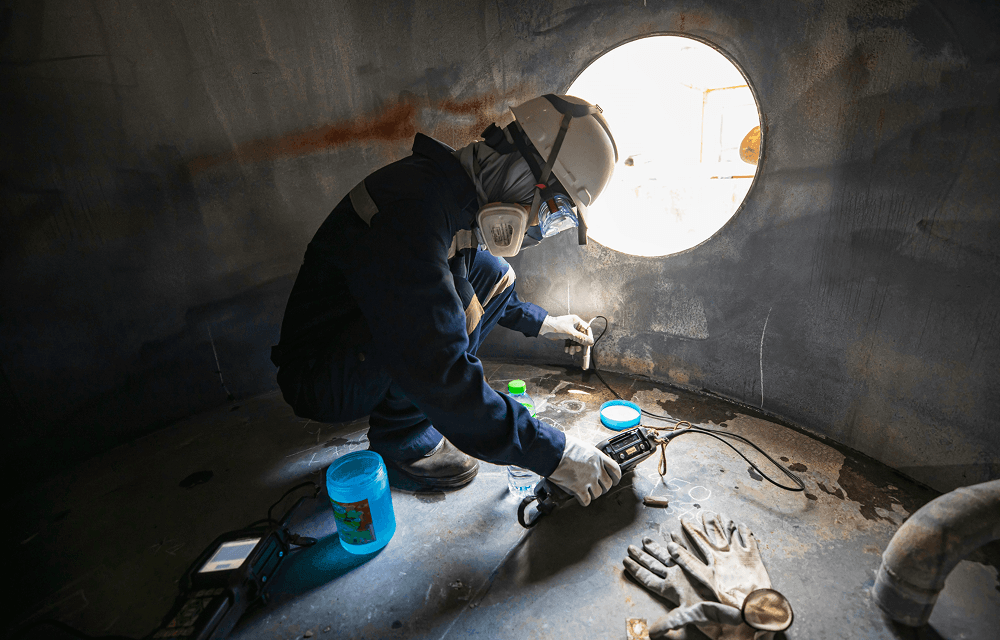
To assess atmospheric hazards, competent personnel should test the atmosphere before entry and continue monitoring as required by the risk assessment and control measures. Atmospheric testing assesses oxygen concentrations, flammable gases, and other airborne contaminants. Oxygen levels outside the commonly referenced range of 19.5% to 23.5% by volume indicate an unsafe atmosphere, but readings within that range do not, on their own, establish that a confined space is safe to enter.
Gas detection and atmospheric monitoring help identify flammable gases and toxic airborne contaminants such as hydrogen sulphide and carbon monoxide. The testing and monitoring regime should reflect the identified hazards, risk assessment, and site control measures. Always record relevant atmospheric test results and control measures in your confined space entry documentation.
Three-phase emergency response planning and site extraction steps
To execute a safe entry and extraction, follow this structured emergency response framework:
Pre-entry risk assessment and hazard isolation Safety personnel evaluate space geometry, identify potential atmospheric hazards, and establish appropriate isolation controls. Check and calibrate gas detection equipment per manufacturer requirements before use.
Access authorisation and live monitoring stationing A competent person completes the confined space entry permit after establishing the required risk assessment and control measures. Qualified stand-by personnel position appropriate retrieval equipment, establish communication lines, and conduct atmospheric monitoring for the duration and conditions specified by the risk assessment and control measures.
Immediate emergency retrieval execution If atmospheric monitors alarm or a worker experiences physical distress, the response team follows the site-specific rescue plan, using non-entry retrieval where practicable and appropriate. Dedicated rescuers may use respiratory protection and mechanical retrieval systems where required by the hazards and rescue plan, while controlling risks to rescuers.
Cost drivers and risk mitigation for industrial rescue services in Sydney
Pricing for industrial rescue services in Sydney is driven by team size, specialist equipment deployment, and required site coverage hours. Complex structures with restricted entry paths may demand technical rescue configurations and specialised respiratory protection.
Project delays, regulatory action, and safety incidents can also create additional operational and commercial liabilities. Coordinating traffic management, site security, and industrial safety services through one provider can simplify communication and service coordination across a project.
Deployment Tier
Core Equipment & Staffing Scope
Primary Cost Drivers
Stand-by Monitoring
Qualified stand-by officer, calibrated gas detector, basic harness retrieval
Entry duration, single access point complexity
Full Technical Rescue
Dedicated rescue personnel, respiratory protection where required, tripod and retrieval systems where suitable
Technical rescue crew combined with traffic management and static site security
Overall project scale, multi-discipline coordination, site access restrictions
SafeWork NSW regulatory frameworks and AS 2865-2009 standards
The Work Health and Safety Regulation 2025 (NSW) requires duty holders to identify and control risks associated with work in confined spaces, including through risk assessment, entry permits, communication and monitoring, and emergency procedures.
Australian Standard AS 2865-2009 provides technical guidance for confined space work, including atmospheric testing, entry procedures, and rescue planning. State guidance on confined-space rescue risks and emergency planning requirements also highlights the statutory duties imposed on PCBUs and other relevant duty holders.
SafeWork NSW has documented incidents in which workers attempting an improvised confined space rescue were also overcome by an oxygen-deficient atmosphere. By engaging trained industrial emergency response teams, you can provide additional rescue capability where your site’s risk assessment and emergency plan identify that capability as appropriate. Read more about a documented confined-space rescue incident involving a secondary rescuer to understand the real risks involved.
Specialised applications across Sydney civil infrastructure and industrial sites
Civil drainage, underground utility networks, and access shafts
Civil infrastructure projects involve deep access shafts, stormwater culverts, and sewer lines with restricted ventilation and access conditions. These environments can present risks from sudden water engulfment, sewer gas accumulation, and restricted movement. In these scenarios, rescue operations in civil utility networks may use vertical tripod winches, remote gas sampling hoses, and dedicated retrieval lines where appropriate.
Industrial tank maintenance, manufacturing vessels, and chemical storage
Manufacturing plants and chemical processing sites feature storage tanks, reaction vessels, and silos that can accumulate hazardous residues. Maintenance in these spaces may require isolating pipework and energy sources, along with appropriate communication and supervision controls. Alongside standard entry procedures, technical response teams may use respiratory protection and specialised extraction harnesses where the identified hazards and rescue plan require them.
Streamline your site safety and compliance requirements
Effective confined space safety in NSW requires suitable personnel, equipment, and clearly defined procedures. Managing high-risk entries without appropriate rescue capabilities can expose personnel to atmospheric hazards and businesses to regulatory enforcement.
By combining traffic management, site security, and industrial safety services under a single provider, you simplify coordination across Sydney Metro and regional NSW projects. To discuss your site safety requirements and request an integrated site risk assessment, contact our team on 1300 007 782 or email info@sstc.net.au.
Frequently asked questions
Under NSW legislation, a confined space is an enclosed or partially enclosed space that is not designed for human occupancy, is intended to be at normal atmospheric pressure while occupied, and poses a health and safety risk from an unsafe oxygen level, contaminants, fire or explosion hazards, or engulfment. Common examples include storage tanks, pipes, sewers, shafts, and underground vaults.
NSW requirements specify suitable first aid and rescue procedures for confined space emergencies, along with a stand-by person who continuously monitors conditions from outside the space. A dedicated rescue team is not universally prescribed for every confined space entry, but a trained rescue team may provide additional capability where the site-specific risk assessment and emergency plan identify that need.
A qualified rescue team may utilise multi-gas atmospheric monitors, tripod retrieval winches, retrieval harnesses, respiratory protection, explosion-proof lighting, and specialised communication systems. The selected equipment should reflect the hazards, space configuration, and rescue plan, and be maintained and used in accordance with applicable requirements and manufacturer instructions.
Atmospheric testing must occur before entry where required by the identified hazards and control measures, with ongoing monitoring used where conditions could change or where the risk assessment requires it. Testing can verify oxygen levels and identify flammable gases and toxic airborne contaminants such as hydrogen sulphide and carbon monoxide.
Training requirements depend on the worker’s role and the work being performed. Relevant nationally recognised competencies may include RIIWHS202 (Enter and work in confined spaces), MSMWHS217 (Gas test atmospheres), and PUASAR025 (Undertake confined space rescue). Additional first aid, CPR, and practical rescue training may also be required, depending on the role, workplace, and emergency plan.
An improvised rescue without appropriate hazard assessment, atmospheric information, and rescue equipment can expose rescuers to the same hazards as the original entrant. SafeWork NSW has documented a molasses tank incident in which a second worker attempting a rescue was rendered unconscious by a lack of oxygen, and notes that a high number of people who die in confined spaces are the rescuers. Rescue attempts should follow the site-specific emergency plan and use appropriate procedures and equipment.