Get A Free Quote
1300 007 782
Call Us On:
1300 007 782G10/RMS Accredited
Competitive Rates
ZERO Accidents or Injuries
25+ years combined experience
50+ years combined experience
Competitive Rates
G10/RMS Accredited
ISO Certified

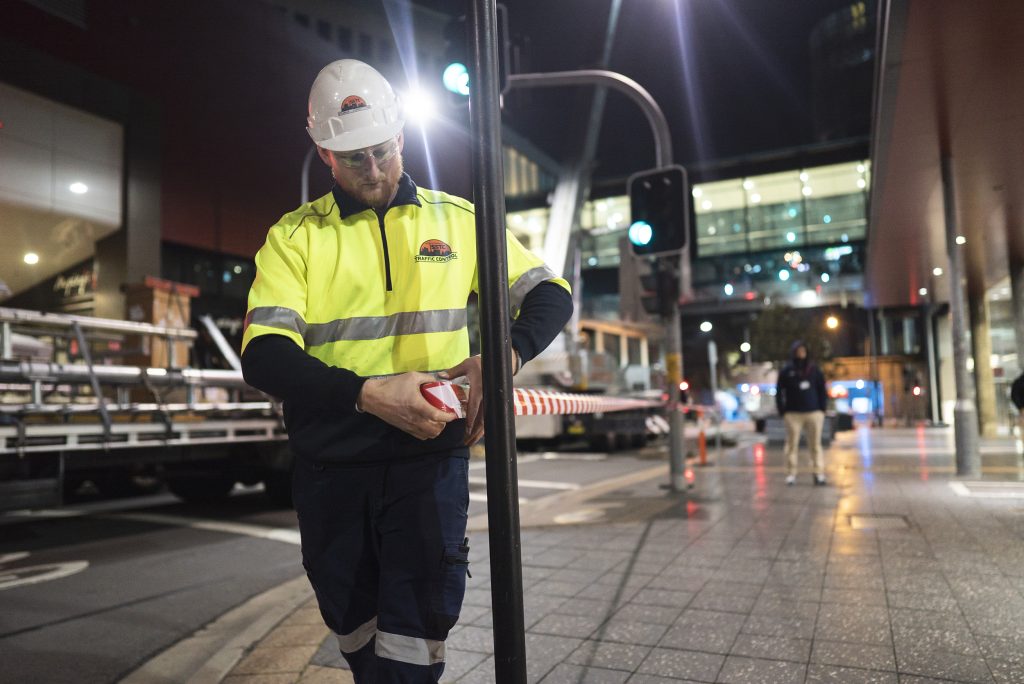
Imagine it is 2:00 AM on a rain-slicked Tuesday. While most of Sydney sleeps, a major water main has just burst beneath a busy intersection in Parramatta, or perhaps an overhead power line has failed in the Inner West. Within minutes, a quiet suburban street is transformed into a high-stakes work zone. There is no time for a three-week consultation period or a multi-stage planning phase. In these moments, the safety of the public and the utility crews rests entirely on the speed and precision of the traffic management response.
Short-term projects, ranging from these midnight emergencies to scheduled NBN upgrades or pothole repairs, represent some of the most volatile environments in the construction industry. At SSTC, we know that "short-duration" does not equate to "low risk." In fact, the compressed timelines and rapid setups required for these jobs mean there is a much smaller margin for error. Managing these works effectively requires a specialised set of skills, an agile fleet, and a deep understanding of how to protect people as the road environment changes by the minute.
Short-duration work is rarely "business as usual." These projects generally fall into categories that demand heightened awareness and specific logistical expertise.
Night works traffic management is a staple of Sydney’s infrastructure maintenance. To keep the city moving during the day, Transport for NSW (TfNSW) often restricts lane closures to the late-night and early-morning hours. While this avoids gridlock, it introduces hazards such as reduced depth perception for drivers, increased glare from work lights, and the ever-present risk of fatigue for motorists and on-site crews.
Utility repairs present a different kind of puzzle. These jobs are often "surgical," requiring a tiny footprint in a high-density area. Whether it’s a gas leak or a fibre-optic pull, the work often happens in narrow corridors where every centimetre of road space is contested. The challenge is to ensure heavy equipment can operate safely without completely blocking access for local residents and businesses.
Then there is the unpredictable world of emergency maintenance. When a hazard appears suddenly, you need emergency traffic control in Sydney that can mobilise instantly. These scenarios often involve working in the worst possible conditions, peak hour traffic, storms, or total darkness, where the priority is immediate containment and the establishment of a safe "buffer zone" for first responders.
Even when a job is slated to last only a few hours, the preparation behind the scenes is exhaustive. The process begins with a focus on TfNSW ROL compliance. A Road Occupancy Licence is a binding legal agreement; if your crew isn't off the road by the exact minute specified, the fines and reputational damage can be severe.
For short-term works, our planning centres on "rapid deployment" Traffic Guidance Schemes (TGS). These plans are designed to be implemented quickly but with zero compromise on safety distances or signage clarity. Key considerations include:
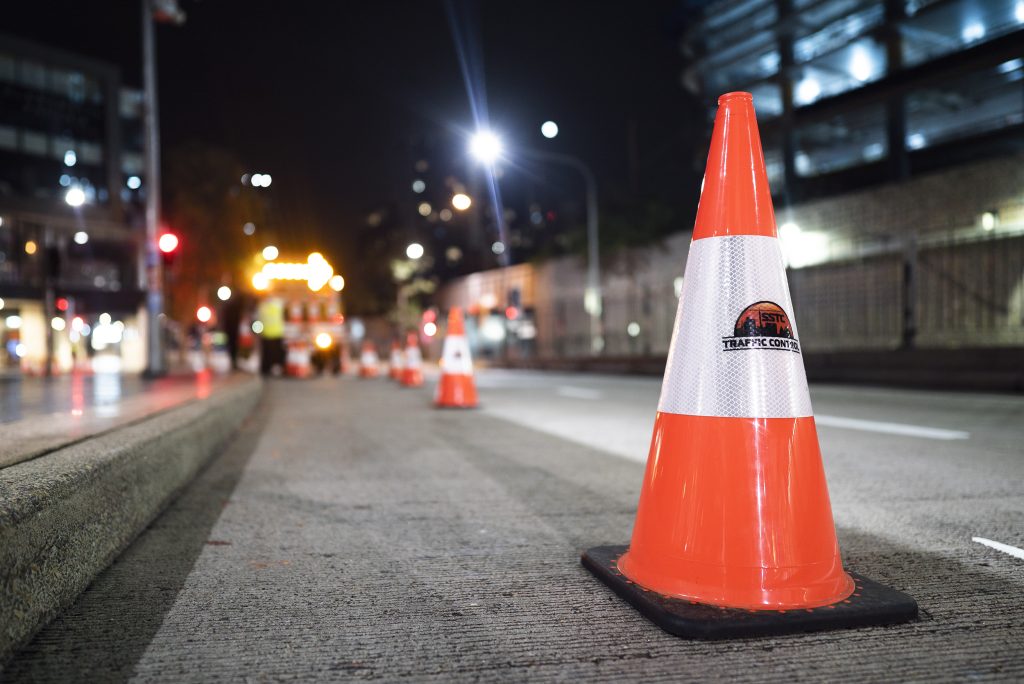
When the sun sets, the "standard" rules of traffic control change. Effective night works traffic management in 2026 is as much about illumination as it is about signage. At SSTC, we ensure that every nighttime site is treated with a "high-visibility" mindset.
We utilise solar-powered lighting towers to wash the work area in clear, white light, reducing the harsh shadows that can lead to trips and falls. However, visibility is a two-way street. We also utilise Variable Message Signs (VMS) placed well in advance of the site to give drivers ample time to process the upcoming lane changes. In the quiet of the night, vehicle speeds tend to increase; a well-placed VMS acts as a digital "speed hump," mentally preparing the driver to slow down long before they reach the first cone.
Utility work is often the most disruptive to the "micro-flow" of a neighbourhood. Whether it's an NBN rollout or a power pole replacement, these jobs happen right at people's front gates.
Traffic controllers serve as the project's public-facing ambassadors. We don’t just hold a bat; we manage expectations. We coordinate closely with the utility technicians to understand their "swing radius" and equipment reach. If a truck needs to block a driveway for twenty minutes, our team communicates that to the resident beforehand, preventing frustration and ensuring a smooth, professional site operation. This "leap-frog" style of traffic control, moving the setup as the utility crew moves down the street, ensures we only occupy the road for as long as absolutely necessary.
When a crisis occurs, the pressure to "just get out there" can lead to dangerous shortcuts. This is why having a partner for emergency traffic control in Sydney is vital. Our emergency response teams are trained to maintain their discipline even when the clock is ticking.
Our response starts with a "Priority 1" mobilisation. Our utes are kept in a state of constant readiness, stocked with the essential signage and safety gear required for an immediate site lockdown. Upon arrival, our first goal is to "stop and hold", stabilising the traffic flow to protect the emergency, and then quickly transitioning into a formal, compliant TGS once the initial danger is contained. We also handle high-speed liaison with the Transport Management Centre (TMC) to ensure that emergency works are logged and remain compliant with state requirements in real time.
The logistics of a four-hour job are often more complex than a four-day one. You have one chance to get the equipment right.
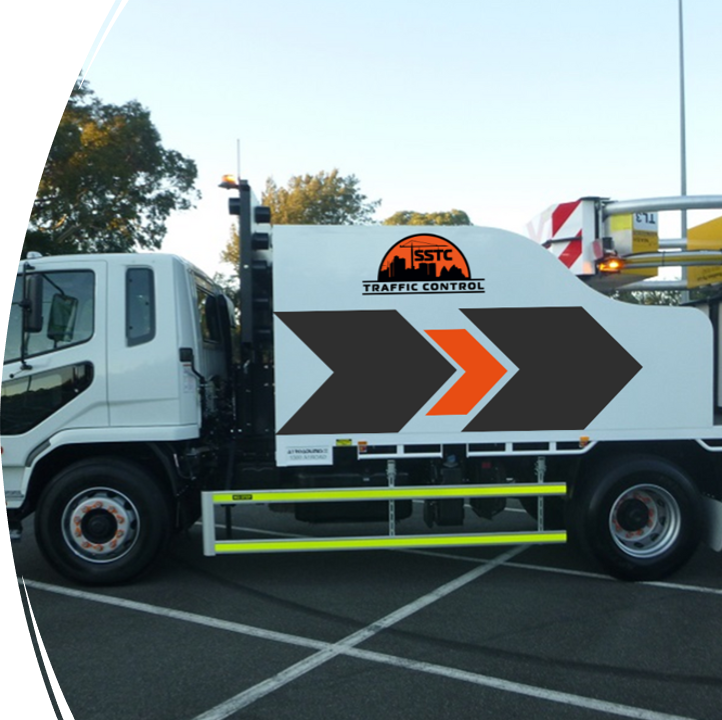
Our short-term response fleet is built for versatility. Every vehicle is a mobile command centre, carrying a full array of AS1742.3-compliant signs, cones, and bollards. In higher-risk areas, we deploy Truck-Mounted Attenuators (TMAs). These "crash trucks" are essential for night-work traffic management on motorways, providing a physical shield of steel between workers and high-speed traffic.
In terms of labour, short-term work requires "switched-on" controllers. There is no time to "settle in" to a shift. Our staff are experts in rapid setup and pack-down procedures, ensuring that the road is returned to the public exactly when promised, fully cleared of debris and equipment.
A short-term project shouldn't mean a shortcut on safety. Whether you are dealing with a scheduled utility upgrade or a midnight emergency, the professional standard of your traffic management reflects on your entire project. By choosing a partner who understands the nuances of TfNSW ROL compliance and the rapid-fire demands of emergency traffic control in Sydney, you protect your crew, your budget, and the public.
At SSTC, we bring a veteran-led precision to every job, regardless of its duration. We provide comprehensive traffic management solutions that adapt to the specific needs of your site. From high-capacity construction traffic control to agile traffic control services for after-hours repairs, we have the fleet and the expertise to keep Sydney moving. Ready to secure your next worksite with a team that values safety as much as you do? Reach out to get a free quote today, and let’s ensure your next short-term project is a long-term success.