Get A Free Quote
1300 007 782
Call Us On:
1300 007 782G10/RMS Accredited
Competitive Rates
ZERO Accidents or Injuries
25+ years combined experience
50+ years combined experience
Competitive Rates
G10/RMS Accredited
ISO Certified

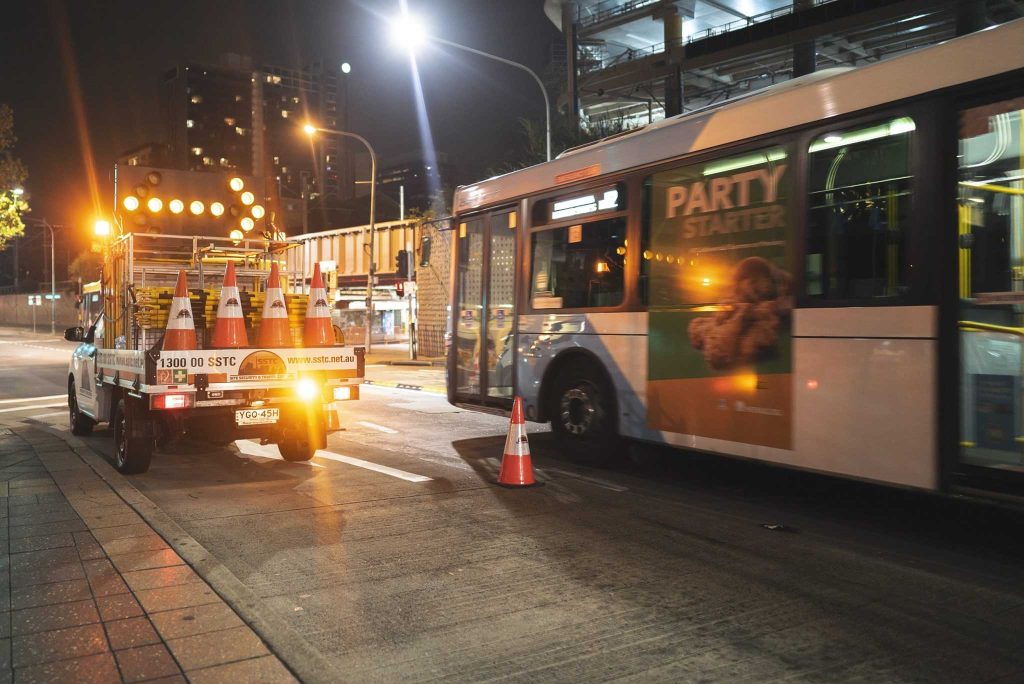
Construction and infrastructure projects are a permanent fixture across Sydney. From the tight streets of the CBD to major arterials in Western Sydney, managing traffic flow is a complex challenge for any site. For project managers and construction firms, ensuring the safety of workers and the public is the priority. This is why a compliant traffic management plan is essential.
However, a plan is only effective if it is based on a thorough risk assessment. In this guide, we outline the critical strategies for assessing risk within your traffic management planning to ensure compliance, safety, and efficiency on your Sydney worksite.
To create an effective plan, you must account for the specific environment you are operating in. Sydney’s road network presents several factors that can increase a project's risk profile.
Sydney deals with high traffic density daily. Work sites operating near major roads like the M4, Parramatta Road, or the Pacific Highway must account for heavy vehicle flow. The risk involves both the safety of workers near moving traffic and the potential for the project to cause gridlock. A traffic management plan risk assessment must analyse traffic data to identify peak windows. High-risk activities, such as crane lifts or lane closures, should be scheduled during off-peak times to reduce disruption.
It is common for multiple developments to occur within the same precinct in Sydney. This increases logistical complexity, as delivery vehicles for different sites compete for limited space. If not managed, this can lead to dangerous queuing on public roads.
In areas like the CBD or near transport hubs, pedestrian footfall is significant. The interaction between heavy construction vehicles and vulnerable road users (pedestrians and cyclists) is a critical risk. Your assessment must map out pedestrian paths and ensure controls do not force people into dangerous situations, such as walking on the road to bypass a blocked footpath.
Weather conditions can change rapidly, impacting site safety. Wet weather reduces visibility and increases stopping distances, while high winds can destabilise temporary signage. A comprehensive risk assessment must ensure controls remain effective during adverse conditions, not just in clear weather.
Many Sydney sites have tight boundaries with limited space for vehicles to turn around. If a truck is forced to reverse onto a public road due to a lack of space, the risk of collision increases significantly. Traffic management plan risk assessment strategies must prioritise forward-movement entry and exit points wherever possible.
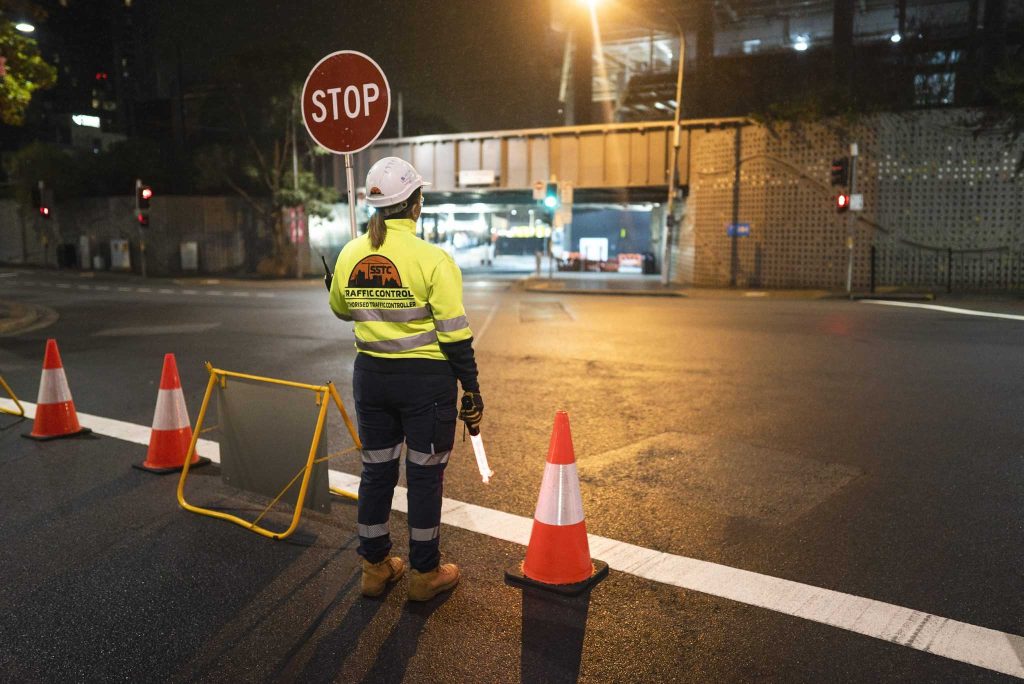
A risk assessment is a dynamic process that shapes your entire Traffic Management Plan (TMP). So, what is the purpose of a traffic management plan? Fundamentally, it is to separate people from vehicles to prevent injury. To achieve this, a structured approach is required.
Before drafting a Traffic Control Plan (TCP), a site inspection is necessary. Identify line-of-sight obstructions, existing street furniture, bus zones, and school crossings. It is also important to consult with traffic controllers, as they can identify ground hazards that office-based planners might miss.
Once hazards are identified, rate them based on likelihood and consequence.
This matrix helps prioritise which risks require immediate engineering controls.
When mitigating risks in your traffic management plan risk assessment, always apply the Hierarchy of Controls:
Effective risk assessment involves consulting with Transport for NSW, local councils, and local businesses. Their insights can reveal risks such as specific delivery times for local shops or school zone hours.
For authoritative guidelines on managing these risks, refer to SafeWork NSW’s detailed resources on traffic management.
Once risks are assessed, the next phase is practical implementation.
Your traffic management plan risk assessment must directly inform your Traffic Control Plan (TCP). If your assessment identifies a high risk of rear-end collisions due to a blind corner, your TCP must include advanced warning signage placed well before the curve to give drivers sufficient reaction time.
What is the purpose of a traffic management plan regarding compliance? It serves as proof that you are adhering to the Roads Act 1993 and Work Health and Safety Regulation 2017. In Sydney, obtaining a Road Occupancy Licence (ROL) or council permits requires a TMP that clearly demonstrates how risks are being managed. Without this, work cannot legally proceed.
A plan relies on the people executing it. You need SafeWork NSW-accredited traffic controllers who can dynamically assess risk. If a queue builds up unexpectedly, they need the training to intervene, such as extending green time on a portable light. Additionally, all equipment, from Class 1 reflective signage to TMA (Truck Mounted Attenuator) vehicles, must be compliant to avoid liability.
Traffic conditions change. A control measure that worked on Monday might fail later in the week due to weather or construction progress. Regular site audits are essential. If a near-miss occurs, work must stop, and the traffic management plan risk assessment should be reviewed immediately.
For technical specifications on signage and device placement, the Transport for NSW Traffic Control at Work Sites manual is the standard reference.
Navigating Sydney’s roads requires strategic planning, regulatory knowledge, and a commitment to safety.
At Site Security & Traffic Control, we understand that every site is unique. Whether you are managing a long-term construction build or a temporary event, our team delivers site-specific NSW traffic management plans that prioritise safety and compliance.
We provide end-to-end solutions. From the initial traffic management plan risk assessment to securing council permits and deploying experienced traffic control services in Sydney, we handle the logistics so you can focus on the project.
Ensure your site is compliant, efficient, and secure.